Wasabi Tours Twilight Volcano & Stargazing Dinner Tour from Kona — Evening Review

The Wasabi Tours twilight volcano and stargazing dinner is the evening companion to the daytime Big Island adventure — where the daytime tour shows you the volcano in bright daylight, the twilight tour shows you Kilauea glowing orange at dusk and the night sky from elevation. At $276 per adult, it's the most expensive standard Kona activity, and the most distinctive: a 12-hour evening departure that combines Hawaii Volcanoes National Park at nightfall, dinner at Volcano's Lava Rock Cafe, and stargazing near Mauna Kea. Set it beside the evening and day tours we compare in Kona.
About This Activity
Up to 24h in advance — full refund
Book today, pay nothing until later
Evening departure from Kona — returns late night; hotel pickup included
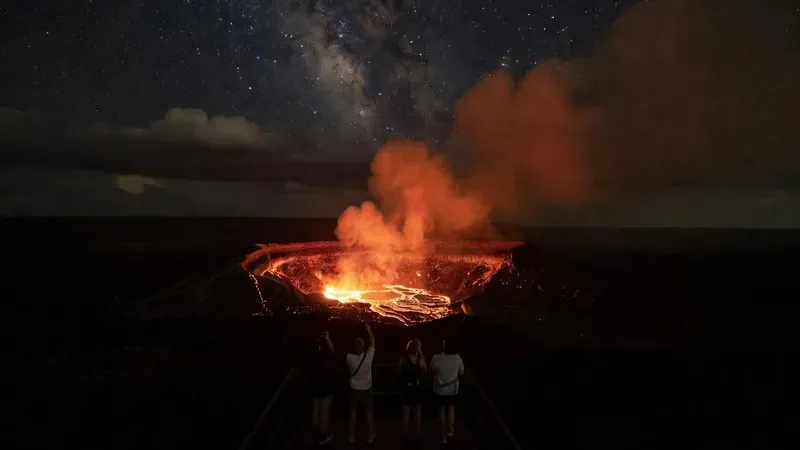
Halema'uma'u lava glow visible from the crater overlook after dark — most dramatic volcanic views
Dinner included at the Volcano village restaurant known for Big Island ingredients and lava-theme decor
Clear skies at elevation — star identification and telescope viewing included
Check Live Availability & Book
Real-time availability for the Wasabi Tours twilight volcano and stargazing dinner. Evening departures — books out ahead. Reserve 2+ weeks in advance during peak months.
Why Evening Changes the Volcano Experience Completely
Kilauea After Dark — The Caldera at Night
Hawaii Volcanoes National Park looks fundamentally different after sunset. During the day, Halema'uma'u Crater is a fascinating geological feature — visible steam, sulfur haze, the dark lava field. After dark, when the lava lake is active, the crater glows orange-red from within and reflects off the cloud of volcanic gas above it, illuminating a column of light visible for miles. The Jaggar Museum overlook and the Ha'akulamanu steam vent walk along the caldera rim are completely different experiences in darkness.
Crater Rim Drive becomes particularly dramatic at night — parking turnouts give views of glowing features not visible during daylight hours. The contrast between the dark basalt and the orange lava glow is stark and photogenic in a way that daytime visits simply aren't.
The evening timing also means the park is significantly less crowded. Day-tour buses leave by 5pm. By 8pm, you may share the caldera overlook with only a few other visitors.
- Lava glow: active lava lake reflects off gas clouds — orange glow visible from crater overlooks
- Crater Rim Drive at night: turnouts show glowing vents and lava features invisible by day
- Crowd advantage: park empties after 5pm — by 8pm the overlooks are quiet
- Photography: long-exposure lava glow shots are a distinct genre; bring a tripod or stable surface
Dinner at Lava Rock Cafe — What to Expect
Dinner is included at Volcano's Lava Rock Cafe, a Volcano village restaurant adjacent to the national park entrance known for Big Island-sourced ingredients and a dining room decorated with volcanic art and lava rock features. The meal is a sit-down dinner — not cafeteria service.
The menu focuses on local ingredients: Big Island beef, fresh Pacific seafood, and vegetables from the cool Volcano highlands. The restaurant is one of the few full-service options in Volcano village and sits at 3,700-foot elevation, which means the air is noticeably cool compared to Kona. Bring a jacket.
Dinner serves as the midpoint of the evening — between the sunset/twilight caldera visit and the nighttime stargazing stop.
- Restaurant: Lava Rock Cafe, Volcano village — sit-down dinner, not cafeteria
- Menu: Big Island beef, Pacific seafood, local vegetables — full dinner service
- Elevation: 3,700 feet — noticeably cooler than Kona; bring a layer for dinner outside
- Timing: dinner falls between the sunset caldera visit and the stargazing portion of the evening
Stargazing After Dinner — What the Night Sky Delivers
After dinner in Volcano, the tour moves to a stargazing location at elevation near Mauna Kea's slopes. The Big Island's geographic isolation, minimal light pollution in the interior, and elevation combine to produce some of the clearest night skies in the Pacific.
The Wasabi stargazing stop includes star identification narration and a telescope for viewing. The Milky Way core is clearly visible on moonless nights from this elevation — not the faint smear visible from coastal areas, but a distinct structure with lanes and star clusters. Mauna Kea's summit observatories (visible as red lights at 13,796 feet) orient the sky geographically.
This is a complementary stargazing experience to the dedicated Mauna Kea summit sunset and stargazing tour with dinner, which includes a private 11-inch Celestron telescope and professional astro-photography at the actual summit. The twilight volcano dinner includes stargazing as one element of a multi-component evening rather than as the main focus.
- Location: high-elevation Mauna Kea slopes — minimal light pollution
- Equipment: telescope included for planetary and deep-sky viewing
- Naked-eye: Milky Way core clearly visible on moonless nights — not the faint version seen from Kona
- Compare to the Mauna Kea summit sunset and stargazing tour with dinner: Mauna Kea summit stargazing ($330) is more intensive — private telescope, summit access, professional astro-photography
Halema'uma'u Crater after dark — the defining visual of the Wasabi twilight tour. When the lava lake is active, the gas cloud above the crater glows orange from below. Daytime visitors miss this entirely.
Who Should Book the Twilight Tour and What to Prepare
Who This Evening Tour Is Best For
The twilight volcano and stargazing dinner is the right choice for:
- Best for: visitors who have already done the daytime Volcanoes, waterfalls and Kona coffee farm day-trip and want the evening/night version of the same landscape — they are genuinely different experiences
- Best for: anyone who prioritizes the Kilauea nighttime lava glow — the caldera after dark is the most dramatic volcanic visual available on the island
- Best for: stargazing enthusiasts who want night sky access without the physical demands of the Mauna Kea summit sunset and stargazing tour with dinner — this covers dark sky viewing at a lower elevation without altitude effects
- Best for: travelers who want a structured evening with dinner included — versus independently driving to the park at night (possible, but less narrative)
- Best for: photography enthusiasts — nighttime volcanic and astrophotography are the primary visual outputs of this tour
Not Suitable For and What to Bring
- Not suitable for: children under 5 years
- Not suitable for: anyone with significant altitude sensitivity — the stargazing location is at moderate elevation (not the summit), but may affect some guests
- What to bring: warm layers — mandatory. The caldera rim at night can be 50°F even in summer; dinner at 3,700 feet is cool; the stargazing location is colder still
- What to bring: camera with manual settings and a tripod if possible — long-exposure volcanic and stargazing photography requires stability
- What to bring: closed-toe shoes required for the national park walking segments
- Not allowed: collecting volcanic material from the national park; touching or approaching wild animals
Twilight Volcano & Stargazing Tour Kona — Frequently Asked Questions
What makes the twilight volcano tour better than a daytime visit?
The nighttime experience at Kilauea is fundamentally different from the daytime visit. When the lava lake is active, Halema'uma'u Crater glows orange-red after dark and reflects off the volcanic gas cloud above it — a visual impossible to see by day. Crater Rim Drive features at night include glowing vents and lava windows that are invisible in daylight. The park is also much quieter after 6pm, when day-tour buses have left.
Is dinner really included in the Wasabi twilight volcano tour?
Yes — a full sit-down dinner at Lava Rock Cafe in Volcano village is included in the $276 price. It is a proper restaurant meal, not a snack or a picnic. The restaurant uses Big Island-sourced ingredients and serves full dinner entrees. This makes the twilight tour a complete evening experience rather than just a tour with a meal stop.
How is the twilight volcano tour different from the Mauna Kea summit stargazing tour?
The twilight volcano and stargazing tour with dinner ($276) combines three elements: Kilauea at night, dinner, and moderate-elevation stargazing. The stargazing is one part of a multi-component evening. The Mauna Kea summit sunset and stargazing tour with dinner ($330) focuses exclusively on stargazing and astronomical observation at the 13,796-foot summit with a private 11-inch Celestron telescope and professional astro-photography. Choose the twilight volcano tour if the lava glow and dinner matter as much as the night sky. Choose the Mauna Kea summit tour if the summit and dedicated astronomical observation are the priority.
What should I wear on the Wasabi twilight volcano tour?
Warm layers are mandatory, not optional. Hawaii Volcanoes National Park sits at 4,000 feet elevation, where temperatures are 15–20°F cooler than Kona and often damp. After sunset, the caldera rim can drop to 50°F even in summer. The stargazing location is higher and colder. Dress for a cold Northern California evening, not a warm Hawaii beach. Closed-toe shoes are required for the park segments. Bring gloves if you run cold.