Best Snorkeling in Kona Hawaii Big Island — Free Spots, Guided Tours & What the Water Actually Looks Like

Snorkeling in Kona Hawaii sits in a different category than most tropical destinations. The Big Island's young volcanic coastline creates a reef system that's still actively building — unusual formations, lava tubes, dramatic underwater topography — and the water visibility regularly exceeds 100 feet. Kahalu'u Beach Park puts you in with Hawaiian green sea turtles for free in 15 minutes. Kealakekua Bay, a 20-minute boat ride south, is one of the finest marine sanctuaries in the Pacific. And after dark, the same coast delivers manta ray encounters that rank among the top wildlife experiences in the world. Snorkeling is one part of everything worth doing on the Kona coast. Reaching most of these spots means driving, which is the subject of do you need a car in Kona, and what a Kona trip costs covers the park fees at the two southern sites.
About This Activity
Up to 24h in advance — full refund
Book your date today, pay nothing until later
Morning departure from Sea Quest Hawaii dock, Kailua-Kona
Kealakekua Bay marine sanctuary + sea caves + lava tube arch
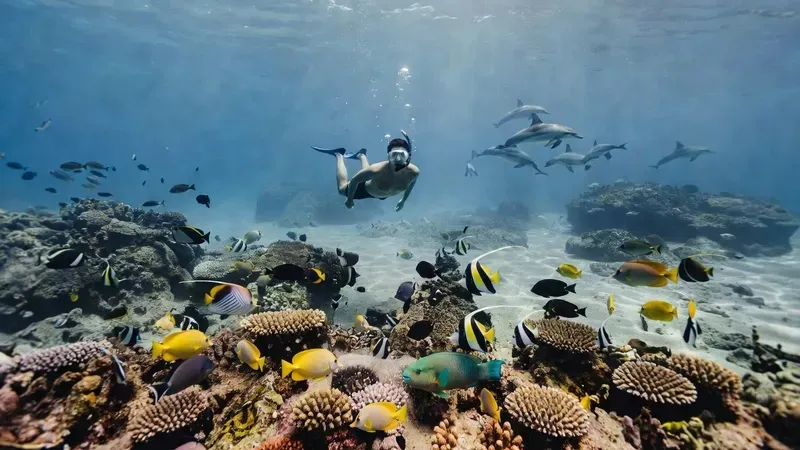
Sea turtles, reef fish, spinner dolphins on occasion
Highest-rated snorkeling tour on the Kona coast — Sea Quest Hawaii
Check Live Availability & Prices
Real-time dates for the Sea Quest South Kona snorkeling tour — Kealakekua Bay, sea caves, lava tubes, and a gourmet deli lunch included.
Best Free Shore Snorkeling in Kona Hawaii
Kahalu'u Beach Park — Best Beginner Snorkeling in Kailua-Kona
Kahalu'u Beach Park is the most accessible snorkeling in Kona Hawaii and one of the most productive sea turtle encounters on the Big Island. The beach sits 4 miles south of downtown Kailua-Kona on Ali'i Drive — easy to reach without a car. A shallow reef system extends from the shore, and Hawaiian green sea turtles (honu) rest on the rocky bottom and graze on algae year-round at depths of 3–10 feet.
The outer reef edge drops to 20 feet with better fish diversity: yellow tang, Moorish idol, humuhumunukunukuapua'a (the Hawaiian state fish), parrotfish, and wrasse. Water clarity is good — typically 30–60 feet of visibility — though afternoon surge can reduce it slightly.
This is one of the best things to do in Kona Hawaii Big Island for families with kids old enough to snorkel, since the inner lagoon stays calm even when swells run outside.
- Location: 78-6740 Ali'i Dr, Kailua-Kona (4 miles south of downtown)
- Cost: free — public beach, $5 parking in the lot (cash)
- Best time: 7–10am before afternoon surge and crowds
- Gear rental: available at the beach from local vendors (~$10–15/day)
- Sea turtle etiquette: stay 10 feet away, never touch, never feed
Two Step (Pu'uhonua O Honaunau) — Kona's Best Advanced Shore Snorkel
Locally called Two Step for its two-ledge entry into the ocean, this site next to Pu'uhonua O Honaunau National Historical Park (Place of Refuge) is the finest free shore snorkeling on the Big Island. The entry is a lava shelf a few feet above water level — you step down two natural rock ledges directly into clear, deep water. No beach, no sand, no surge entry issues.
The reef starts immediately at depth 10–15 feet and slopes away to walls dropping past 60 feet. Spinner dolphins shelter in the bay in the mornings, turtles are constant, and rare fish (frogfish, leaf scorpionfish, octopus) turn up for divers who slow down and look carefully. Big-eye trevally and white tip reef sharks patrol the deeper walls.
Two Step is 18 miles south of Kailua-Kona (about 25 minutes on Route 160 through South Kona). There is no fee for snorkeling — only the adjacent Pu'uhonua O Honaunau park requires admission ($25/vehicle, NPS). The parking area at Two Step is informal and fills early on weekends.
- Location: 1 mile past Pu'uhonua O Honaunau NHP on Hwy 160 South Kona
- Cost: free — not part of the national park, separate lava rock entry
- Best time: 7–9am to see spinner dolphins resting before heading offshore
- Skill level: intermediate to advanced — lava shelf entry requires dry-feet confidence
- Distance from Kona: 18 miles south (25 min via Hwy 11 and 160)
Honokohau Harbor — Turtle Town Just North of Kona
Honokohau Harbor, 2 miles north of downtown Kailua-Kona, offers easy shore snorkeling in a protected anchorage where Hawaiian green sea turtles congregate so reliably the area is known locally as Turtle Town. Turtles rest on the sandy bottom between coral heads at 10–15 feet and are completely accustomed to snorkelers. For anyone who wants a sea turtle encounter without driving anywhere, this is the simplest option.
The reef system is modest compared to Kahalu'u or Two Step — this is primarily a turtle-watching spot rather than a reef dive — but the turtles are so abundant (10–20 individuals on a typical morning) that it's hard to leave disappointed. Entry is via the boat harbor beach area. Look for the informal entry at the north side of the harbor.
- Location: Honokohau Harbor, 2 miles north of Kailua-Kona on Hwy 19
- Cost: free — public beach area at the harbor
- Best time: 7–11am before the afternoon wind picks up
- What to expect: 10–20 sea turtles, modest reef fish diversity
- No facilities — arrive prepared with your own gear, snacks, and water
Kekaha Kai State Park — Remote Pristine Snorkeling North of Kona
Kekaha Kai State Park (Kona Coast State Park) sits 5 miles north of Kailua-Kona off Highway 19, but the 1.5-mile unpaved access road requires a 4WD vehicle or a 30-minute walk in. Those who make the effort find Mahai'ula Bay and Maniniowali Beach (Kua Bay) — two of the most pristine snorkeling environments near Kona, with near-perfect water clarity, minimal crowds, and healthy reef systems that see far less foot traffic than the accessible southern spots.
Maniniowali Beach (Kua Bay) at the southern end of the park is the more accessible of the two — a short drive and short walk from the main lot when the park gate is open (dawn to dusk). The bay's protected cove creates consistently calm conditions, and the reef along the right side of the bay has good fish diversity and turtle encounters. Bring everything you need — there are no facilities beyond composting toilets.
- Location: 5 miles north of Kailua-Kona on Hwy 19, then unpaved road
- Cost: free — state park, no admission fee
- Access: 4WD recommended for the access road; Kua Bay accessible to standard vehicles when gate is open
- Best time: weekday mornings, December through April for the calmest conditions
- Bring: all your own water, snacks, gear, and sun protection — no facilities
Kealakekua Bay — a protected marine sanctuary 20 minutes south of Kona by boat. Visibility regularly exceeds 100 feet.
Kealakekua Bay — The Best Snorkeling Near Kona Hawaii
Why Kealakekua Bay Is in a Class of Its Own
Kealakekua Bay is a State Marine Life Conservation District — no fishing, no anchoring, restricted boat access — which is exactly why it looks the way it does. The reef here has recovered to a density of coral cover and fish biomass that most snorkelers from outside Hawaii have never seen. Parrotfish the size of golden retrievers. Hawksbill turtles sharing space with spinner dolphins 50 feet down. Manta rays on certain mornings.
The bay also holds the Captain Cook Monument, a 27-foot white obelisk on the north shore marking where Captain James Cook was killed in 1779. Tour boats drop anchor near the monument site; the reef begins immediately below the boat at 15 feet and extends in three dimensions — walls, overhangs, caves, and a dramatic topographic drop into the open Pacific.
Kealakekua Bay is not reachable by car (the hiking trail has been periodically closed, and swimming the bay is impractical). Access is by tour boat or kayak. This is why guided snorkel tours here are genuinely worth the premium — it's not something you replicate on your own without significant planning.
- Status: State Marine Life Conservation District — protected from fishing and anchoring
- Access: by tour boat or kayak only — the Captain Cook trail has periodic closures
- Depth: snorkeling at 10–30 feet, with reef walls dropping to 80+ feet
- Marine life: parrotfish, sea turtles, spinner dolphins, manta rays (occasional), reef sharks
Sea Quest South Kona Snorkeling Tour — What You Actually Get
The Sea Quest Hawaii South Kona snorkeling tour is the top-rated snorkel tour on the Kona coast — a perfect 5.0★ across 100 reviews, which is genuinely rare for any tour product.
The boat is a rigid inflatable (RIB), which matters: RIBs ride faster and more smoothly than traditional dive boats, give you an unobstructed view of the coastline, and allow access to shallow sea caves and lava tube arches that larger boats can't enter. You visit three distinct sites in one 5-hour trip: Kealakekua Bay, at least one sea cave system, and a remote black sand beach accessible only by water.
Gear is provided (mask, fins, snorkel, wetsuit top if needed), gourmet deli lunch is included, and Sea Quest is a Hawaii Ecotourism Association member — you're not on a 40-person tourist shuttle. Group sizes are small.
Meeting point is the Sea Quest Hawaii dock in Kailua-Kona. Arrive 15 minutes before departure.
- Price: $200 per adult — includes all gear, gourmet deli lunch, and snorkel instruction
- Duration: 5 hours total
- Group size: small groups — rigid inflatable boat, not a large charter vessel
- Sites visited: Kealakekua Bay + sea caves + remote black sand beach
- Meeting point: Sea Quest Hawaii dock, Kailua-Kona (arrive 15 min early)
Kayaking to Kealakekua Bay — The DIY Option
Kayaking to Kealakekua Bay is possible but requires planning. Several kayak rental companies in Napo'opoo and Keauhou offer guided kayak tours or rentals with permits. The paddle from Napo'opoo (closest put-in) to the monument is about 1.5 miles across the bay, exposed to trade winds — the morning is calmer; afternoon winds pick up and can make the return difficult.
State permits are required for commercial kayak tours in the bay. Independent kayakers do not need a permit for the bay itself, but landing at the monument area has become restricted — check the current DLNR rules before planning an independent kayak trip.
For first-time snorkelers or families with children, the tour boat approach (Sea Quest and similar operators) is lower-stress, more time in the water, and includes gear. Kayaking to Kealakekua is rewarding for experienced paddlers who want a longer adventure that begins well before the boats arrive.
- Kayak rental: available in Napo'opoo and Keauhou (guided tours or rental with permit)
- Paddle distance: ~1.5 miles from Napo'opoo to the monument
- Best time: depart before 8am to avoid afternoon trade winds
- Landing: check current DLNR rules — the monument area has landing restrictions
- Better for: experienced paddlers who want the full morning experience
Snorkeling with Manta Rays in Kona Hawaii — Day and Night
Manta Ray Night Snorkeling — Kona's Most Unique Ocean Experience
After dark on Kona's coast, underwater lights draw plankton, and plankton draws giant Pacific manta rays — some with 12-foot wingspans — to within arm's reach of snorkelers floating at the surface. This is Kona's most famous marine encounter, and it's not an exaggeration to call it one of the top 5 wildlife experiences in the United States.
Snorkelers hold a light board at the surface. Mantas circle beneath you in spiraling feeding rolls, passing so close you can see their gill rakers opening and closing to filter plankton. It is disorienting and unforgettable in equal measure.
Two tiers of tours run this experience nightly off the Kona coast:
- Snorkel-focused tour (Hang Loose — the Kailua-Kona manta ray night adventure): dedicated night snorkel in the water with the mantas, $122/person
- Boat-based viewing (Kona Coast Boat Tours — the Kailua-Kona manta ray watching nighttime boat trip): watch from the boat or snorkel from the platform, $75/person
- Both run nightly, weather permitting — manta sightings are not guaranteed but the rate is very high (~95% on good nights)
Day Snorkeling vs Night Manta Ray Snorkeling — Which to Prioritize
If you have multiple days in Kona, do both. If you have to choose one, the answer depends on what you want:
The day snorkeling at Kealakekua Bay gives you the richer overall reef experience — more colors, more species, more topography, the Captain Cook Monument as a focal point, and the chance to see spinner dolphins. It's the classic Pacific reef snorkeling experience elevated to exceptional quality.
The manta ray night snorkel gives you something categorically different — a nighttime open-water encounter with the largest rays in the ocean, at extremely close range. It doesn't look like a reef dive because it isn't one. It's a pelagic plankton-feeding event that happens to be accessible to snorkelers.
For most visitors doing things to do in Kona Hawaii Big Island, the manta rays are the more unusual experience and the harder one to replicate elsewhere. Do the daytime reef snorkeling at Kahalu'u or Two Step for free, and put your tour budget toward the night manta experience.
Kona Snorkeling Conditions — Best Time, What to Bring, and What to Know
Best Time to Snorkel in Kona Hawaii
Kona's west-facing coast is protected from the northeast trade winds by the bulk of Mauna Kea and Kohala, making it one of the calmest coastlines in Hawaii year-round. This is why Kona gets 300+ days of sunshine annually — the mountains block the wet trade winds and keep the leeward coast dry and calm.
For snorkeling conditions specifically:
December through April brings the clearest water (lowest plankton bloom, highest visibility — up to 120+ feet at Kealakekua). This is also humpback whale season, when you may hear whale song underwater while snorkeling. Mornings are consistently calm.
May through October brings warmer water temperatures (79–82°F vs. 75–77°F in winter) and slightly more fish activity on the reef, but occasional swell from Southern Hemisphere storms can reduce visibility. Morning snorkeling is still reliably calm.
Any month is good for snorkeling in Kona Hawaii. The Big Island genuinely has some of the most consistent ocean conditions of any Hawaiian island.
- Best visibility: December through April (up to 120+ feet at Kealakekua Bay)
- Warmest water: May through October (79–82°F)
- Best time of day: 7–11am before afternoon trade winds and surge build
- Year-round sea turtles: always present at Kahalu'u, Two Step, and Honokohau
- Humpback whales (seasonal): December through April — you can hear them underwater
What to Bring Snorkeling in Kona
Kona's lava coastline is beautiful and unforgiving. Rocky entries, sea urchins in shallow areas, and intense sun are the main hazards. Preparation is simple but worth getting right.
- Reef-safe sunscreen or a rash guard — Kona sun is intense even in winter; chemical sunscreen is harmful to reef and legally restricted in Hawaii
- Fins — helpful even in shallow water for maneuverability around coral
- Wetsuit top or rash guard — even in warm months, 2+ hours in the water gets cold; rentals available at dive shops
- Underwater camera — a GoPro or similar; Kona reef diversity is worth documenting
- Water and snacks — for self-guided spots with no vendors (Kekaha Kai, Two Step)
- Sea turtle protocol: 10-foot distance minimum, never touch, never feed — this is federal law under the Endangered Species Act
Not Suitable For — Important Things to Know
Guided snorkel tours in Kona (including Sea Quest's South Kona snorkeling and coastline exploration) are generally not suitable for children under 5, pregnant women, or people with back problems or mobility impairments — the RIB boat entry requires stepping down onto an inflatable hull, and the open-ocean motion in transit can be uncomfortable. Shore snorkeling at Kahalu'u is more accessible for young children and nervous snorkelers.
For non-swimmers or those new to snorkeling, life vests are available on all licensed tour boats and at many shore sites. Kahalu'u Beach Park is specifically recommended for first-time snorkelers: calm inner lagoon, shallow water, lifeguards on duty, and experienced volunteers from the Reef Teach program who explain the marine life and conservation context.
- Not suitable for guided boat tours: children under 5, pregnant women, back problems, mobility impairments
- What to bring: just swimwear, towel, reef-safe sunscreen — tour provides all gear
- Not allowed: touching or feeding marine life, wearing gloves while diving (prohibited in Hawaii)
- Beginner recommendation: start at Kahalu'u Beach Park (calm, shallow, lifeguards present)
Best Snorkeling in Kona Hawaii — Frequently Asked Questions
What is the best snorkeling spot in Kona Hawaii?
Kealakekua Bay is the best snorkeling near Kona Hawaii — a protected marine sanctuary with visibility up to 120 feet, dense reef life, sea turtles, spinner dolphins, and the Captain Cook Monument as a landmark. It's only accessible by boat or kayak. For free shore snorkeling, Kahalu'u Beach Park (4 miles south of downtown Kona) is the best option for sea turtle encounters, while Two Step at Pu'uhonua O Honaunau offers the richest reef for intermediate and advanced snorkelers.
Can you snorkel for free in Kona Hawaii?
Yes. Kahalu'u Beach Park, Two Step (Pu'uhonua O Honaunau), and Honokohau Harbor are all free public snorkeling sites near Kailua-Kona. Kahalu'u has a $5 parking fee but no beach entry charge. Kekaha Kai State Park is also free but requires a 4WD access road or a 30-minute walk. For the best reef conditions (Kealakekua Bay), you need a paid boat tour or kayak rental.
Are there sea turtles at Kona beach snorkeling spots?
Yes — sea turtles are one of the most reliable encounters in Kona Hawaii. Hawaiian green sea turtles (honu) are present year-round at Kahalu'u Beach Park, Two Step, and Honokohau Harbor. At Kealakekua Bay, both green sea turtles and hawksbill turtles appear. Federal law requires you to stay at least 10 feet away and never touch, chase, or feed them. Turtles rest on the bottom and graze on algae — they generally ignore snorkelers who give them space.
How far is the best snorkeling from Kailua-Kona?
Kahalu'u Beach Park is 4 miles south of downtown Kona (10 minutes). Two Step at Pu'uhonua O Honaunau is 18 miles south (25 minutes). The Kealakekua Bay snorkel tour departs from Kailua-Kona dock and reaches the bay in 20–30 minutes by boat. Kekaha Kai State Park is 5 miles north (10 minutes) but add 30 minutes for the access road or walk.
Is snorkeling at Kealakekua Bay worth the price?
Yes — Kealakekua Bay is a protected marine sanctuary with significantly richer reef life than any accessible shore site near Kona. The Sea Quest tour ($200) includes 5 hours, 3 snorkel sites, gourmet deli lunch, all gear, and access to sea caves and lava tubes you cannot reach on your own. It holds a perfect 5.0★ rating across 100 reviews. For a one-day snorkeling experience on the Big Island, this is the best single purchase you can make.
What is the water temperature for snorkeling in Kona Hawaii?
Water temperature for snorkeling in Kona Hawaii ranges from 75–77°F in winter (December through March) to 79–82°F in summer (June through September). A rash guard or thin wetsuit top is comfortable for extended sessions in any season. Most snorkel tour operators provide wetsuit tops on request. The inner reef at Kahalu'u stays slightly warmer than the open ocean sites.
Can you snorkel with manta rays in Kona during the day?
The manta ray feeding aggregation that Kona is famous for occurs at night, when underwater lights attract plankton and the mantas come to feed. Daytime manta ray sightings are possible but uncommon and unpredictable — mantas are typically offshore feeding during daylight hours. For a guaranteed (high-probability) manta encounter, book a dedicated night snorkel tour. The two top-rated options depart after sunset from the Kona coast.
What marine life can you see snorkeling in Kona Hawaii?
Snorkeling in Kona Hawaii commonly produces: Hawaiian green sea turtles, spinner dolphins (especially mornings at Two Step and Kealakekua), yellow tang, Moorish idols, parrotfish, triggerfish (humuhumunukunukuapua'a), wrasse, butterflyfish, and Moorish idol. Hawksbill turtles appear at Kealakekua Bay. Octopus, frogfish, and moray eels reward slow, careful observers. On night snorkels: giant Pacific manta rays with wingspans up to 14 feet. Humpback whale song is audible underwater December through April.