Best Beaches in Kona Hawaii Big Island — White Sand, Black Sand, Green Sand, and the Reefs In Between
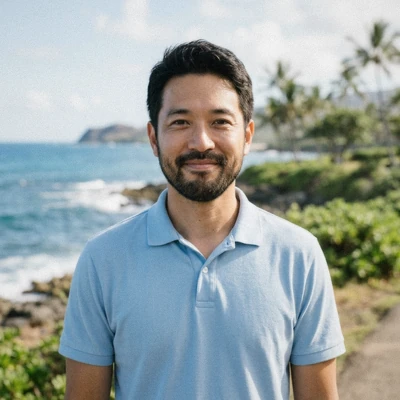
The Big Island's coastline covers 266 miles and crosses every climate zone on Earth — which means the beaches are genuinely unlike anything else in Hawaii. Within an hour's drive of Kailua-Kona, you can move from the brilliant white sand of Hapuna Beach (repeatedly ranked among the top beaches in the United States) to the jet-black volcanic sand of Punalu'u where green sea turtles haul out in the sun, to the impossibly green olivine sand of Papakolea Beach — one of only four green sand beaches in the world. This guide covers the best beaches near Kona by type, distance, and what you'll actually find there. For the tours that reach the beaches no road serves, see Kona's full list of tours and activities.
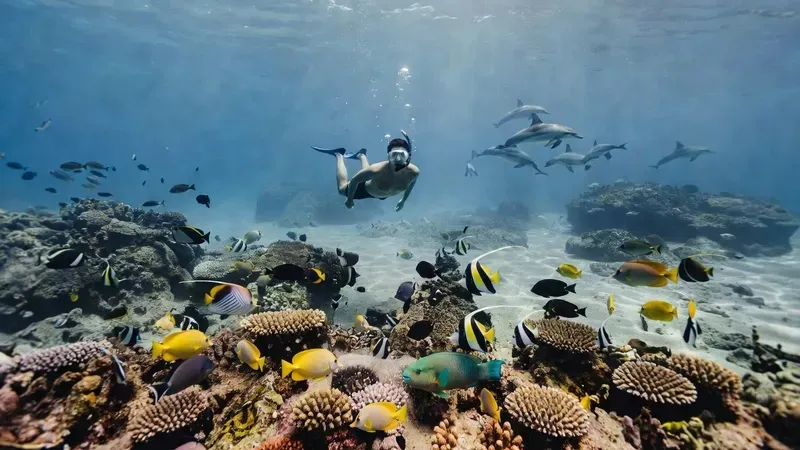
About This Activity
Up to 24h in advance — full refund
Book today, pay nothing until later
Accessible only by boat — one of the most secluded beaches on the South Kona coast
Snorkeling the Captain Cook Monument reef before the beach stop
Geological formations along the South Kona coastline — only accessible by small RIB boat
Highest-rated snorkeling and coast tour on the Big Island — Sea Quest Hawaii
Check Live Availability & Prices
Real-time dates for the Sea Quest South Kona coast tour — Kealakekua Bay snorkeling, sea caves, and remote black sand beach in one 5-hour trip.
Best Beaches Near Kailua-Kona — Within 30 Minutes
Kahalu'u Beach Park — Sea Turtles and the Best Beginner Snorkeling in Kona
Kahalu'u Beach Park, 4 miles south of Kailua-Kona on Ali'i Drive, is the most visited beach in the Kona area and the best all-around beach for most visitors. It's not a swimming beach in the classic sense — the inner reef creates a shallow lagoon ideal for snorkeling rather than open-water swimming — but the combination of easy access, abundant sea turtles, and consistent conditions makes it the first stop for any beach day in Kona.
Hawaiian green sea turtles (honu) rest and graze on algae on the reef at 3–10 feet, completely habituated to snorkelers. Yellow tang, parrotfish, Moorish idols, and humuhumunukunukuapua'a (the Hawaiian state fish) are reliably present. The beach has parking, restrooms, showers, and lifeguards — one of the few Kona beaches with a full service setup.
The Reef Teach program operates at Kahalu'u on select mornings — volunteer marine naturalists who explain what you're seeing and why the reef matters. Worth timing your visit for.
- Location: 78-6740 Ali'i Dr, Kailua-Kona (4 miles south, 10 min from downtown)
- Parking: $5 cash in the lot; street parking free but fills fast on weekends
- Best for: snorkeling, sea turtle encounters, beginners, families with children
- Facilities: restrooms, showers, lifeguards, gear rental on-site (~$10–15/day)
- Best time: 7–10am before afternoon surge and weekend crowds
Magic Sands Beach (La'aloa Beach) — Kona's Best Bodysurfing Beach
Magic Sands Beach — officially La'aloa Beach Park — sits just 3 miles south of downtown Kailua-Kona on Ali'i Drive. The name comes from its sand: in calm summer months (May through September), a white sand beach stretches 200 feet along the bay. In winter, high surf can pull virtually all the sand out to sea overnight, leaving only bare rock — then deposit it back after the swell passes. Locals call this 'disappearing beach.'
When the sand is present, Magic Sands is the most popular local swimming and bodysurfing beach in Kona. The wave break is consistent and playable for boogie boards and bodysurfers; it's not a surf beach (the wave is shallow and close to shore), but it's the best beach for wave riding without a surfboard near Kailua-Kona. Parking is limited (street only) and fills by 9am on weekends.
- Location: 77-6452 Ali'i Dr, Kailua-Kona (3 miles south, 8 min from downtown)
- Best for: swimming, bodysurfing, local beach atmosphere
- Sand presence: full sand beach in summer; can disappear completely in winter swells
- Facilities: restrooms, small parking area (arrives early — fills fast on weekends)
- Water conditions: moderate shore break — check conditions before bringing young children
Honokohau Beach — Turtle Town North of Kona
Honokohau Beach at Kaloko-Honokōhau National Historical Park is a 2-mile stretch of mixed black and white sand running north from Honokohau Harbor. The beach is within a national park — no admission fee — and sees a fraction of the traffic of Ali'i Drive beaches. Green sea turtles rest on the sand at the beach's north end in large numbers; 10–15 turtles on the sand simultaneously is common in the mornings.
The water here is calmer than the south Kona beaches and suitable for swimming from the sandy sections. The surrounding park contains ancient Hawaiian fish ponds, petroglyphs, and heiau (temple platforms) — worth an hour of walking the shoreline trail if you have time. The park is open dawn to dusk, free entry. Parking at the Honokohau Harbor lot (free).
- Location: Kaloko-Honokōhau National Historical Park, 2 miles north of Kona via Hwy 19
- Best for: sea turtles on the sand, uncrowded beach, national park context
- Entry: free — national park, dawn to dusk
- Parking: Honokohau Harbor lot (free), then 10-minute walk to the beach
- Also worth seeing: ancient Hawaiian fish ponds and petroglyphs along the shoreline trail
Best Beaches on the Kohala Coast — 25 to 45 Minutes North of Kona
Hapuna Beach — Repeatedly Ranked Hawaii's Best White Sand Beach
Hapuna Beach at Hapuna Beach State Recreation Area is the finest white sand beach in Kona's driving range — and most years, one of the top 10 beaches in the United States. The beach is half a mile long, 60 yards wide, and the sand is the brilliant white of crushed coral and shell. The water is a consistent deep turquoise, and the gentle slope of the seafloor makes it safe for swimming for most ability levels.
Snorkeling is possible at the south end of the beach, where a rocky point creates a small reef system. The main beach is a swimming beach — calm and clear on most days, with moderate shore break in winter swells. Hapuna is 30 miles north of Kailua-Kona on Highway 19 — about 35 minutes without traffic.
The state park charges $10 per vehicle for parking (free for Hawaii residents). Facilities include restrooms, showers, covered picnic tables, and a concession stand in season. This is one of the few Big Island beaches with shade structures. Arrive before 9am on weekends — Hapuna fills and parking closes when the lot reaches capacity.
- Location: Hapuna Beach State Recreation Area, off Hwy 19, Kohala Coast (30 miles north of Kona, 35 min)
- Parking: $10/vehicle at the state park lot — free for residents
- Best for: swimming, bodyboarding, picnicking, the best white sand beach experience near Kona
- Snorkeling: south end rocky point — modest reef, better as a secondary activity
- Facilities: restrooms, showers, picnic tables, concession stand in season
- Arrive early: lot fills and closes on busy weekend and holiday mornings
Mauna Kea Beach (Kauna'oa Beach) — The Most Beautiful Beach on the Big Island
Kauna'oa Beach — known as Mauna Kea Beach for the resort that sits above it — is widely considered the most beautiful beach on the Big Island. The crescent of perfect white sand, the gentle turquoise water, the framing of the Mauna Kea Hotel, and the consistent calm conditions combine into a scene that regularly appears in best-of-Hawaii travel photography.
The beach is public — all Hawaii beaches are public by law, including resort beaches — but the parking lot is run by the Mauna Kea Beach Hotel. Visitors must call the hotel to reserve one of 30 public parking passes per day (available from 8am, first-call basis). Passes fill quickly; call a day in advance. The hotel has no obligation to serve non-guests beyond the parking pass.
Swimming is excellent year-round — calm conditions, gradual depth, generally clear water. Snorkeling at the north end rocky point is rewarding for turtles and reef fish. This is the most serene beach experience near Kona for those willing to plan ahead for parking.
- Location: Mauna Kea Beach Hotel, Kohala Coast (32 miles north of Kona, 40 min)
- Public parking: 30 passes/day — call the hotel to reserve (book a day ahead)
- Best for: swimming, scenic beauty, most photogenic beach near Kona
- Snorkeling: north end rocky point — sea turtles, reef fish
- Facilities: access to the hotel beach (chairs for hotel guests), no concession for non-guests
- Alternative nearby: Hapuna Beach is 1 mile south, no reservation needed
'Anaeho'omalu Bay (A-Bay) — Waikoloa's Calm Beach with Ancient Fish Ponds
'Anaeho'omalu Bay — universally called A-Bay — is the main beach at the Waikoloa Beach Resort area, about 25 miles north of Kailua-Kona. The beach is a long crescent of white and tan sand on a sheltered bay that is usually calmer than the open-coast beaches. Wind and swell rarely affect A-Bay significantly — it's the most reliably swimmable beach in the Kohala resort corridor regardless of conditions elsewhere.
Behind the beach lie two ancient Hawaiian fishponds — Ku'uali'i and Kahapapa — restored and stocked with mullet as they were in ancient times. The ponds are designated cultural sites and can be walked around via a 20-minute shoreline path. Petroglyphs from the ancient Hawaiian lava trail system (Ala Kahakai) are accessible a short walk south along the coast.
Water sports rentals (kayaks, stand-up paddleboards, snorkel gear) are available at the beach concession. Snorkeling is possible at the south end of the bay where rocky formations shelter reef fish and turtles.
- Location: Waikoloa Beach Resort, off Waikoloa Beach Dr (25 miles north, 30 min from Kona)
- Best for: calm swimming, water sports rentals, families, ancient Hawaiian fish ponds
- Parking: free public beach parking lot at A-Bay
- Snorkeling: south end rocky formations — calm and good for beginners
- Cultural sites: ancient fish ponds and petroglyphs within walking distance
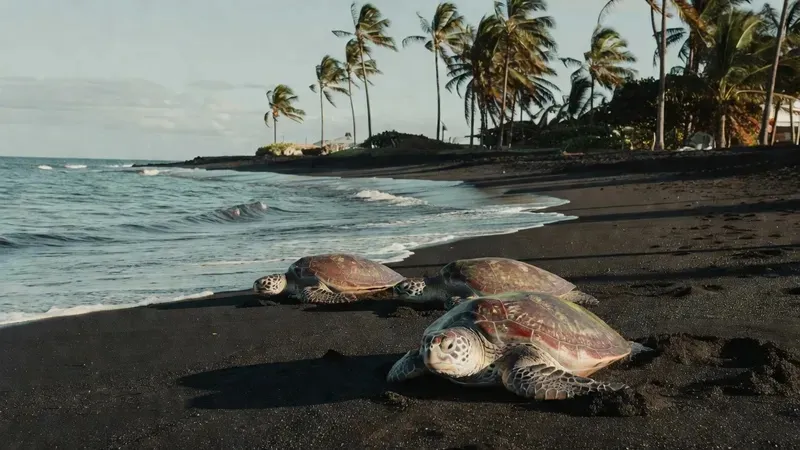
Punalu'u Black Sand Beach — one of the most visually dramatic beaches in Hawaii. Green sea turtles haul out here daily, the contrast of their shells against the black volcanic sand unmistakable.
Remote and Unusual Beaches Worth the Drive from Kona
Maniniowali Beach (Kua Bay) — The Best Secluded White Sand Beach Near Kona
Maniniowali Beach at Kekaha Kai State Park (also called Kona Coast State Park) is the finest secluded beach within 30 minutes of Kailua-Kona. The drive is 5 miles north on Highway 19, then a 1.5-mile unpaved road to the park's southern section — passable in most vehicles when the road is dry, but a 4WD is recommended. When conditions are right, this is one of the most pristine swimming beaches on the Big Island.
The beach is a compact crescent of bright white sand on a protected cove. The protected shape keeps conditions calm on most days, and the water is exceptionally clear — 40–60 foot visibility even in the shallows. Sea turtles rest on the beach and feed in the rocky sections on either side. The reef at the right side of the cove is worth snorkeling for those who bring gear.
Facilities are minimal: composting toilets, no showers, no vendors. Bring everything you need — water, snacks, sunscreen, and gear. The park is open dawn to dusk; the gate closes and locks at the posted time. Getting stuck inside after closing requires a call to the ranger.
- Location: Kekaha Kai State Park (Kona Coast SP), 5 miles north of Kona via Hwy 19
- Access: 1.5-mile unpaved road — passable in most vehicles when dry; 4WD recommended
- Best for: secluded white sand, calm swimming, sea turtles, solitude
- Facilities: composting toilets only — bring all food, water, and gear
- Gate hours: dawn to dusk — check posted time, gate locks at close
Punalu'u Black Sand Beach — The Most Dramatic Beach on the Big Island
Punalu'u Black Sand Beach, about 65 miles southeast of Kailua-Kona (roughly 1 hour 45 minutes via Highway 11 through South Kona and Ka'ū), is one of the most photographed beaches in all of Hawaii. The sand is jet black — ground from basalt lava by wave action — and the contrast with the turquoise ocean, green coconut palms, and the brown shells of resting sea turtles creates images that don't look real.
Green sea turtles haul out onto Punalu'u daily, sometimes in groups of 10–15 individuals. They rest on the black sand between feeding dives, and they are the primary attraction. Federal law requires 10 feet of distance; rangers and volunteer monitors are frequently present and enforce the rule.
Punalu'u is a significant drive from Kona — it's best combined with a trip to Hawaii Volcanoes National Park (which is 28 miles further east from Punalu'u). The Shaka Braddah Tours Big Island day trip departs from Hilo and includes Punalu'u as a primary stop alongside the park and Rainbow Falls. If you're based in Kona, driving to Punalu'u independently is common — budget a full day trip that includes Volcanoes NP.
- Location: 96-pound Ninole Loop Rd, Ka'ū district (65 miles SE of Kona, ~1h 45min)
- Best for: black sand photography, sea turtle encounters, dramatic coastal scenery
- Sea turtles: 10–15 honu hauled out daily — maintain 10-foot federal distance
- Combine with: Hawaii Volcanoes National Park is 28 miles further east — budget a full day
- Tour option: Shaka Braddah Tours Big Island volcano and black sand beach day trip departs Hilo and includes Punalu'u
Papakolea Green Sand Beach — One of Four Green Sand Beaches in the World
Papakolea Beach, also known as Green Sand Beach, sits inside Mahana Bay on the southernmost point of the Big Island — and is one of only four green sand beaches on Earth. The color comes from olivine crystals (a semi-precious mineral) eroded from the surrounding cinder cone of Pu'u o Mahana and concentrated on the beach by wave action. The green is real and unmistakable, ranging from pale sage to deep olive depending on the light.
Getting there requires effort. The beach is 2.5 miles from the end of South Point Road (Ka Lae, the southernmost point of the United States), accessible by a 45–60 minute walk each way over unmarked lava terrain, or by 4WD shuttle truck operated by local families (a small fee, unofficial but generally reliable). The road to the beach is not passable in standard vehicles — don't attempt it.
The beach itself is small — a crescent of green sand in a protected bay with high cliffs on three sides. Swimming is possible in calm conditions but check the surf: the bay is somewhat protected but open-ocean swells can make the water rough. No facilities whatsoever — this is as remote as the Big Island beaches get without a boat.
- Location: Mahana Bay, South Point (Ka Lae) — 2.5 miles from South Point Road end
- Distance from Kona: ~75 miles (2+ hours via Hwy 11 south)
- Access: 45–60 minute walk each way OR local 4WD shuttle truck (small fee, no permit needed)
- The green color: olivine crystals from the eroded Pu'u o Mahana cinder cone
- No facilities: bring water, food, sunscreen, proper footwear for lava terrain
- One of only 4 green sand beaches in the world: Papakolea (Hawaii), Talofofo (Guam), Punta Cormorant (Galapagos), and Hornindalsvatnet (Norway)
Kona Beach Practical Guide — Currents, Conditions, and What to Know
Ocean Safety on Kona Hawaii Beaches
Hawaii has some of the most beautiful beaches in the world — and some of the most variable ocean conditions. The Big Island's coastline is entirely lava-based, which means wave energy reflects off rocky shores with more force than sandy beaches elsewhere. Understanding the conditions before entering the water matters:
Check the Hawaii Beach Safety website and posted signs at each beach. The green/yellow/red flag system at Kahalu'u and staffed beaches gives a current reading. For unstaffed beaches (Maniniowali, Papakolea, Honokohau), look at the wave energy when you arrive.
Shore break is the main risk on Kona beaches — waves that break directly on a steep shore with power. Magic Sands Beach has the strongest shore break in the Kona area. Don't turn your back on the ocean anywhere.
Rock entries require care — lava is sharp and unforgiving. Booties or water shoes are worth having for rocky entry beaches like Two Step and Honokohau.
Rip currents are less common on the leeward (west) Kona coast than on the windward side of the island, but they do form in channels between rocky points. If caught in a current, swim parallel to shore, not directly back to beach.
- Check posted signs and Hawaii Beach Safety app before entering unfamiliar water
- Shore break: the primary hazard — don't turn your back on the ocean
- Rock entries: water shoes recommended for lava-shelf beaches
- Rip currents: swim parallel to shore if caught — not directly back
- Lifeguards: only at Hapuna Beach, Kahalu'u Beach Park, and a few Kohala resort beaches
- Rule: if in doubt, don't go out
Best Time to Visit Kona Beaches
Kona's leeward coast is protected from trade wind swell by the island's mountains, making it one of the calmest coastlines in Hawaii year-round. This consistency is what allows the manta ray night snorkel, the Kealakekua Bay tours, and the beach days to work reliably throughout the calendar.
Summer (May–September): Calmest conditions overall. Sand is present at Magic Sands Beach. Water is warmest (79–82°F). Best months for Maniniowali (Kua Bay) and remote beaches. No whale watching during these months.
Winter (December–April): Occasional north swell can reach some beaches, particularly the more exposed north-facing stretches. Kahalu'u is largely unaffected. Hapuna can close temporarily during large swell events. Trade winds are lighter than summer on average. Humpback whale watching season runs December through April.
For beach days in Kona, any month is viable. The biggest variable is the specific beach — check conditions the morning of.
- Calmest conditions: May–September (summer) — ideal for remote beaches
- Warmest water: May–September (79–82°F)
- Winter swell: December–March can affect more exposed beaches; Kahalu'u and A-Bay are largely protected
- Best time of day: mornings — calmer water, fewer crowds, better snorkeling visibility
Not Suitable For and What to Bring
Beach access on the Big Island varies significantly by site. What works for a family with young children at Hapuna is not what works at Papakolea.
- Families with young children: best at Hapuna (lifeguards, gradual depth, good facilities), Kahalu'u (calm lagoon, lifeguards, sea turtles), A-Bay (calm and shallow)
- Remote beaches (Maniniowali, Papakolea, Honokohau): self-sufficient visitors only — no facilities, no lifeguards, no shade
- What to bring for any beach: reef-safe sunscreen (required by Hawaii law), water (vending is not available at most beaches), snacks, towel, light shade (pop-up or sarong — UV index on Kona coast is extreme midday)
- Not allowed: touching or approaching sea turtles within 10 feet — federal law under the Endangered Species Act; rangers enforce this at popular turtle beaches
Best Beaches in Kona Hawaii Big Island — Frequently Asked Questions
What is the best beach in Kona Hawaii?
For white sand and swimming, Hapuna Beach (35 minutes north on the Kohala Coast) is the finest beach near Kona and one of the best in the United States. For snorkeling and sea turtle encounters within Kailua-Kona itself, Kahalu'u Beach Park (4 miles south) is the most accessible and rewarding. For seclusion, Maniniowali Beach (Kua Bay) at Kekaha Kai State Park (5 miles north) is outstanding. For the most dramatic scenery, Punalu'u Black Sand Beach (1h 45min southeast) and Papakolea Green Sand Beach are unique experiences found nowhere else in the world.
Are there sea turtles at Kona Hawaii beaches?
Yes — Hawaiian green sea turtles (honu) are reliably present at several beaches near Kona. Kahalu'u Beach Park has turtles in the water year-round grazing on reef algae. Honokohau Beach at Kaloko-Honokōhau NHP has 10–15 turtles resting on the sand on most mornings. Punalu'u Black Sand Beach (1h 45min southeast) is famous for honu hauled out on the black sand. Federal law requires a 10-foot distance — no touching, no feeding, no approaching.
Is there a black sand beach near Kona Hawaii?
The most famous black sand beach on the Big Island is Punalu'u, about 65 miles southeast of Kailua-Kona (1 hour 45 minutes). It has jet-black volcanic sand, green sea turtles, and coconut palms — one of the most photographed beach scenes in Hawaii. The Sea Quest South Kona snorkeling tour also accesses a remote unnamed black sand beach on the South Kona coast, accessible only by boat.
What beaches near Kona are good for swimming?
The best swimming beaches near Kona are: Hapuna Beach (30 miles north, Kohala Coast) — the most consistently safe and beautiful swimming beach in the area; Kauna'oa (Mauna Kea) Beach (32 miles north) — calm, stunning, limited public parking; 'Anaeho'omalu Bay (A-Bay, 25 miles north) — sheltered and calm year-round; and Maniniowali Beach (Kua Bay, 5 miles north) in summer conditions. Kahalu'u Beach Park is excellent for snorkeling but the inner lagoon is shallow and the outer reef has some current.
How far is Hapuna Beach from Kailua-Kona?
Hapuna Beach is approximately 30 miles north of Kailua-Kona on Highway 19 (Queen Ka'ahumanu Highway) — about 35 minutes in normal traffic. The beach is at the Hapuna Beach State Recreation Area, just north of the Mauna Kea Beach Hotel turnoff. Parking is $10 per vehicle (cash or card). Arrive before 9am on weekends and holidays — the lot fills and gates close when capacity is reached.
Is Papakolea Green Sand Beach worth the trip from Kona?
For the experience of seeing one of four green sand beaches in the world, yes — it's genuinely unusual and the green color is visually striking. The logistics are significant: 75 miles from Kona (2+ hours via Hwy 11), plus 2.5 miles each way on foot or via unofficial 4WD shuttle from the South Point road end. Plan a full day and combine it with South Point (southernmost US land point), Punalu'u Black Sand Beach, and Hawaii Volcanoes National Park for a complete South Kona and Ka'ū circuit.
Do I need to pay to access Kona Hawaii beaches?
All beaches in Hawaii are public by law — no private beaches, no beach access fees. What you may pay for is parking: Hapuna Beach State Recreation Area charges $10/vehicle, Kahalu'u charges $5/vehicle. Kohala resort beaches (Mauna Kea Beach, Hilton Waikoloa) require calling ahead for a limited-quantity public parking pass. Kekaha Kai State Park (Maniniowali/Kua Bay) has free parking when the gate is open. Honokohau Harbor and Kaloko-Honokōhau NHP have free parking. Federal beaches (Kaloko-Honokōhau) are free entry.